A STONE DISPLAY SOLUTION EXPERT !



Top 10 Smart Tile Sample Board Ideas That Sell
Table of Contents
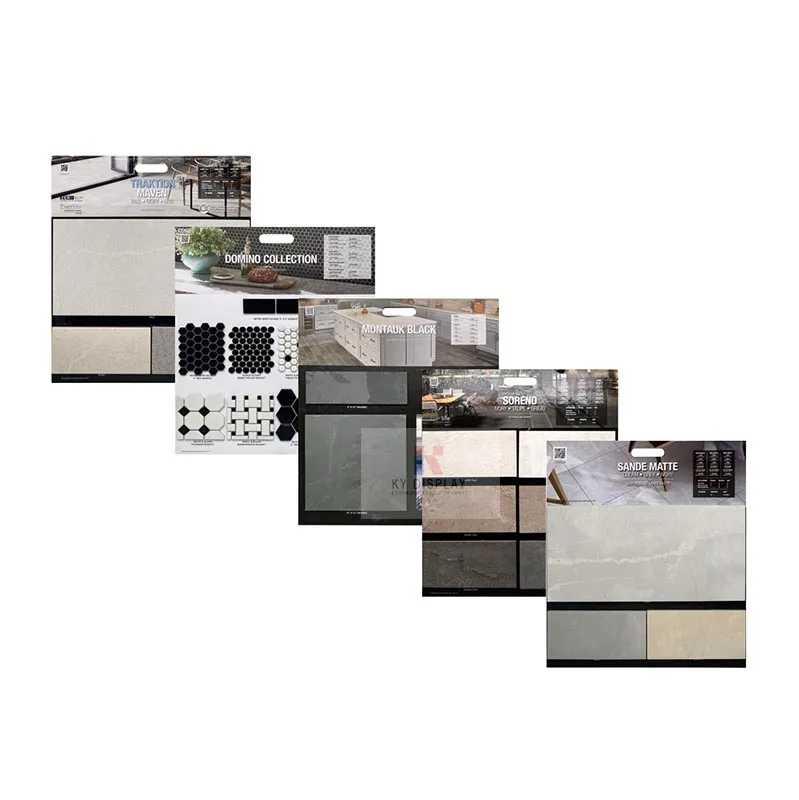
A tile sample board is a rigid panel carrying one tile or a small set at close to installed size, mounted so a customer sees pattern repeat, edge profile and grout behaviour instead of a loose square in the hand. It is the step between browsing and committing.
Who this is for: tile retailers, distributors and showroom owners whose ranges run to thousands of references. The board is what turns a catalog into a shortlist a customer can act on.
Why a Tile Sample Board Sells at Full Scale
A tile sample board solves what chips and books cannot: scale. A loose chip shows colour. A board shows how the pattern repeats, how the edge is finished, and what a grout joint does to the overall read. Most showrooms carry thousands of SKUs, so the board is the tool that makes a range shoppable.
Book and board are not rivals. A book is portable and lets a client compare a whole range in one hand. A board stays on the wall and confirms the choice at the size it will be installed. Teams that use both see fewer change-of-mind returns, which is why they belong in one system.
Board Sizes the Trade Actually Uses
Size should follow the tile, not the rack. Common board formats run from 12 by 12 inches through 12 by 18, 18 by 24 and 24 by 24, with large-format panels reaching 24 by 48 inches. A 12 by 24 board is the workhorse, because it shows pattern repeat without demanding much wall. Match your tile sample board to the formats you stock, and treat these as industry reference.
10 Tile Sample Board Ideas That Sell
1. Full-Tile Board
Mount one tile at true size. Customers buy the tile, not the swatch, and a full tile removes the guesswork about scale.
2. Pattern-Repeat Board
Mount four or more face variations from the same dye lot. Two tiles side by side do not predict how two hundred will look on a floor.
3. Grouted Joint Board
Grout changes the finished look more than most customers expect. Show it, rather than describing it.
4. Edge-Profile Board
Leave the edge visible. Rectified versus cushioned, thickness and back markings only show on the actual tile, and a tile sample board that hides them invites a wrong specification.
5. Printed Technical Data
Print the numbers the customer cannot see. Water absorption under 0.5 percent is the threshold used to define porcelain, and a wet coefficient of friction around 0.42 is the common minimum for interior floors.
6. Two-Finish Pair
Show matte and polished versions of the same tile on one board. Finish is where customers hesitate, and seeing both removes the hesitation.
7. Application-Zoned Board Wall
Separate wall tile, floor tile, outdoor and mosaic into labelled zones. Clear zoning stops a customer specifying a finish for the wrong application.
8. Handled Board for Client Loan
Build a handled version customers can take home. Tile reads differently under domestic light, and a loan board sets that expectation honestly.
9. Material-Zoned Board
Give porcelain, ceramic and mosaic their own board formats. Each material reveals itself at a different size, so one tile sample board size cannot serve all three well.
10. Board Plus Chip Drawer
Put a shallow drawer of loose chips beneath the board. The board confirms the decision, and the drawer lets the customer take a piece away.
How to Choose a Tile Sample Board
Start from weight, then substrate. Porcelain and stone are heavy, so a board needs a rigid substrate and a rack with a base wide enough that a leaned panel cannot tip it. Steel around 2.0 mm is a common specification for daily showroom handling, while MDF and wood suit lighter sheets and premium ranges, and plastic works well for mosaic and smaller formats.
Lighting is the highest-return change you can make. Aim the light at the board face rather than the ceiling, because glare off a glossy surface hides the very finish the customer came to check. Neutral-to-daylight sources around 4000 to 5000 K read honestly, while warm sources near 2700 to 3000 K flatter and mislead on any tile sample board.
Three Mistakes to Avoid
Mounting boards so the edge profile is hidden. Lighting the ceiling instead of the board face. Mixing applications on one tile sample board, which makes a wall tile look like a floor tile.
For tile standards and terminology, the Tile Council of North America publishes reference material retailers use, and Coverings is where the tile and stone industry reviews new display systems. KYDISPLAY builds OEM/ODM tile sample board systems, double-sided slanted board racks, mosaic board racks and handled wood boards to your tile sizes and logo. For the portable side of the system, see our tile sample book ideas. Start a specification through the custom display rack page.
Frequently Asked Questions
What is a tile sample board?
A rigid panel that carries one tile or a small set at close to installed size, so a customer can judge pattern repeat, edge profile and grout behaviour.
Board or book, which should I use?
Both. A book is portable and lets a client compare a whole range in one hand, while a board stays on the wall and confirms the choice at installed scale.
What board size works best?
A 12 by 24 inch board is the workhorse because it shows pattern repeat without demanding much wall. Larger panels suit large-format tile, as an industry reference.
Why does edge profile matter on a board?
Rectified versus cushioned edges, thickness and back markings only show on the actual tile. Hiding them on a board invites a wrong specification.
What technical data should I print on a board?
Water absorption, wet coefficient of friction, abrasion class and strength figures. Absorption under 0.5 percent is the threshold used to define porcelain.
What substrate should a board use?
Match it to sample weight. Steel suits heavy porcelain and daily handling, MDF and wood suit lighter sheets and premium ranges, and plastic suits mosaic and small formats.
How should I light a tile sample board?
Aim light at the board face rather than the ceiling, and use neutral-to-daylight sources around 4000 to 5000 K. Warm light near 2700 to 3000 K flatters and misleads.