A STONE DISPLAY SOLUTION EXPERT !



7 Best Smart Tile Sample Organizer Ideas
Table of Contents
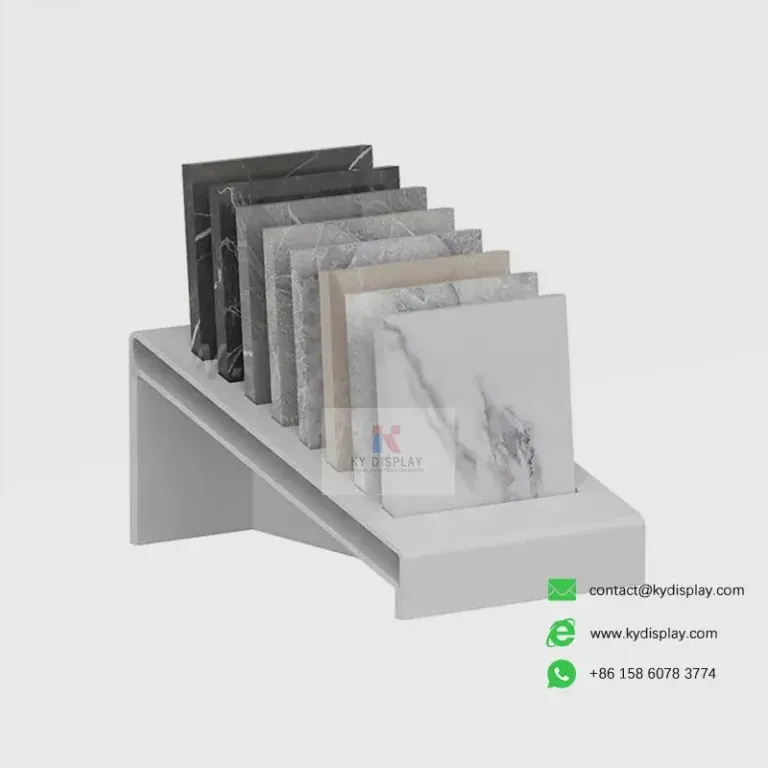
A tile sample organizer is the storage system that keeps hundreds of loose tile chips findable by color, size, finish and application, so your team stops digging and your customers stop waiting. Most small tile showrooms do not struggle because they lack product. They struggle because the product is hard to reach and hard to compare.
Who this is for: tile retailers, distributors and showroom owners whose sample library has outgrown its storage. North America and Europe are the largest tile markets, while China supplies a majority of display hardware, so most buyers are specifying fixtures with an overseas OEM/ODM partner rather than a local shop.
Why a Tile Sample Organizer Beats More Shelf Space
A tile sample organizer solves the problem that open shelving creates: sample accumulation. Every new collection arrives with enthusiasm, and older boards stay on display long after their selling value has dropped. Without a retirement rule, the floor gets crowded and the customer journey gets confusing.
Showroom guidance consistently points to the same three fixes. Group chips by color family so customers can eliminate options fast. Separate them by application, because wall tile, floor tile and outdoor paving carry different expectations. Then put basic technical data at the point of decision: size range, thickness, finish and stock status.
7 Tile Sample Organizer Ideas That Work
1. Drawer Cabinet by Color Family
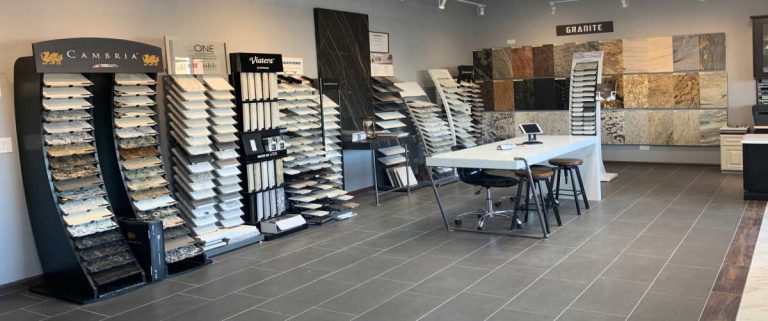
A drawer cabinet gives every collection a fixed place and a smooth viewing motion. Sort drawers into warm beige, cool gray, white marble-look and black stone so buyers eliminate the wrong options in seconds. This is the highest-capacity format for a tile sample organizer.
2. Slot-Box Grid for Loose Chips
Open slot boxes hold loose chips upright and visible, which suits mixed sizes and unusual formats. They also make damage obvious: a chipped corner stands out in a slot grid but hides in a stack.
3. Wall-Mounted Flip Panels
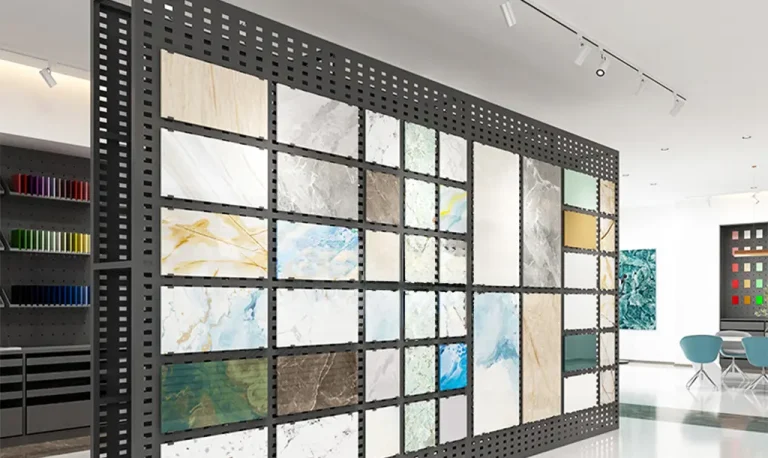
Wall space is the cheapest display area in the building, and most stores under-use it. Flip panels show dozens of chips without giving up a single square metre of floor, which is why they anchor most small-showroom layouts.
4. Pull-Out Drawers for Deep Catalogs
If your range runs to hundreds of references, pull-out drawers beat open shelving. Staff retrieve an exact chip in seconds, and the closed cabinet keeps the sales floor visually calm.
5. Active, Archive and Remove Zoning
Run three statuses, not one. Active samples are current and visible. Archive samples stay available for special projects but leave the main browsing path. Remove samples are discontinued, damaged or duplicated. This is the simplest cure for accumulation.
6. Spec Strip at the Point of Decision
Put size, thickness, finish and stock status next to the chip instead of in a binder at the sales desk. Customers self-serve the basics, and your team handles the questions that actually need expertise.
7. A Retirement Calendar
Review each product family on a schedule, with tile colors checked quarterly and stone ranges reviewed by project demand. Add new arrivals only after deciding what they replace, so growth stops quietly taking over the floor.
How to Choose the Right Tile Sample Organizer
Start from your sample program, not from a catalog. List your most common chip sizes and board dimensions, then match capacity to range: broad catalogs need high-count drawers, while premium lines need fewer, larger chips. Fixture design drives behavior, so if a unit is hard to reset, samples will end up in the wrong place.
Three Mistakes to Avoid
Buying for today’s sample count instead of next season’s. Mixing finishes inside one drawer, which buries the comparison customers came for. Skipping labels, which turns every customer question into a staff task.
For tile standards and terminology, the Tile Council of North America publishes reference material retailers use, and Coverings is where the tile and stone industry reviews new display systems. KYDISPLAY builds OEM/ODM tile sample organizer cabinets and pull-out drawer stands to your chip sizes and logo, with a free quote via the custom display rack page.
Frequently Asked Questions
What is a tile sample organizer?
A storage and presentation system, such as drawer cabinets, slot boxes or flip panels, that keeps loose tile chips sorted by color, size, finish and application so staff and customers can find them quickly.
Why not just stack tile samples on shelves?
Stacks hide damage, waste vertical space and force customers to dig. A dedicated organizer keeps every chip visible, upright and in a defined place.
How do I stop sample accumulation?
Use three statuses, active, archive and remove, and review each product family on a calendar, adding new arrivals only after deciding what they replace.
What chip sizes should an organizer hold?
Common tile chips run 100 by 100 mm, 150 by 150 mm and 200 by 200 mm. Match drawer depth to your actual chip program rather than forcing samples into a generic cabinet.
Should samples be grouped by color or by application?
Start with color family so customers can eliminate options fast, then separate by application, because wall tile, floor tile and outdoor paving carry different expectations.
Can a tile sample organizer be branded?
Yes. KYDISPLAY builds OEM/ODM organizers with logo headers, colors and dimensions matched to your brand and showroom.