A STONE DISPLAY SOLUTION EXPERT !



7 Best Unique LVT Display Rack Ideas for Showrooms
Table of Contents
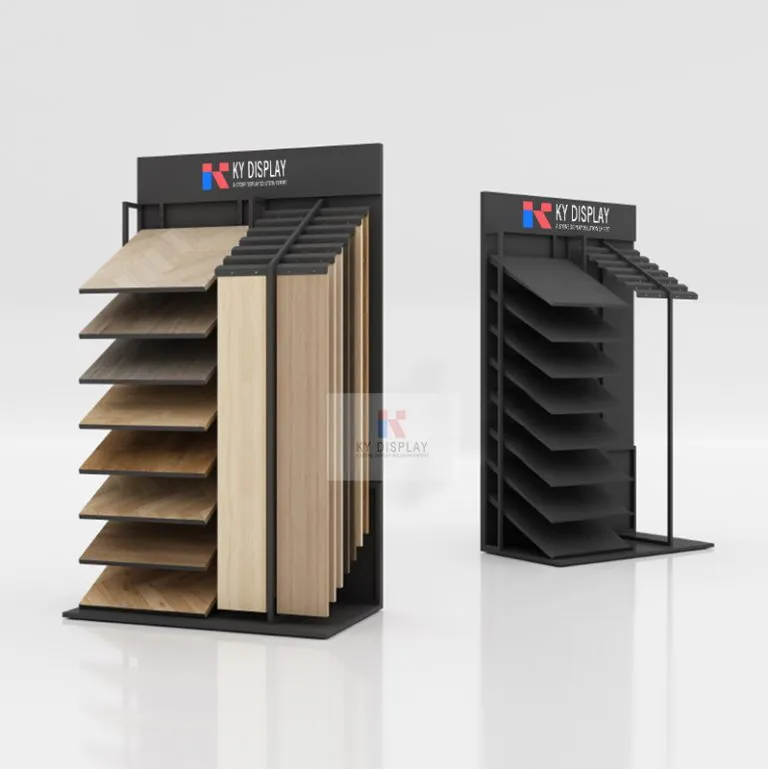
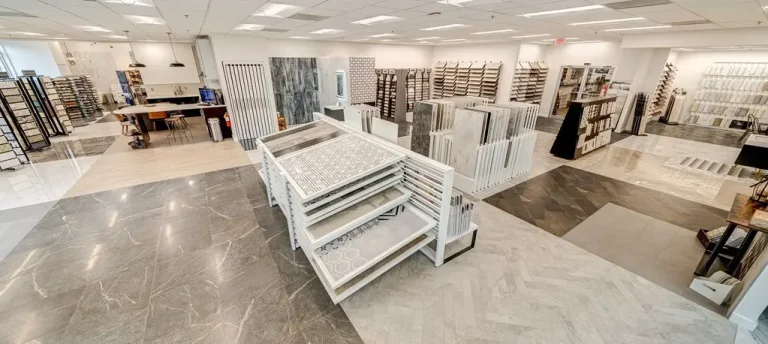
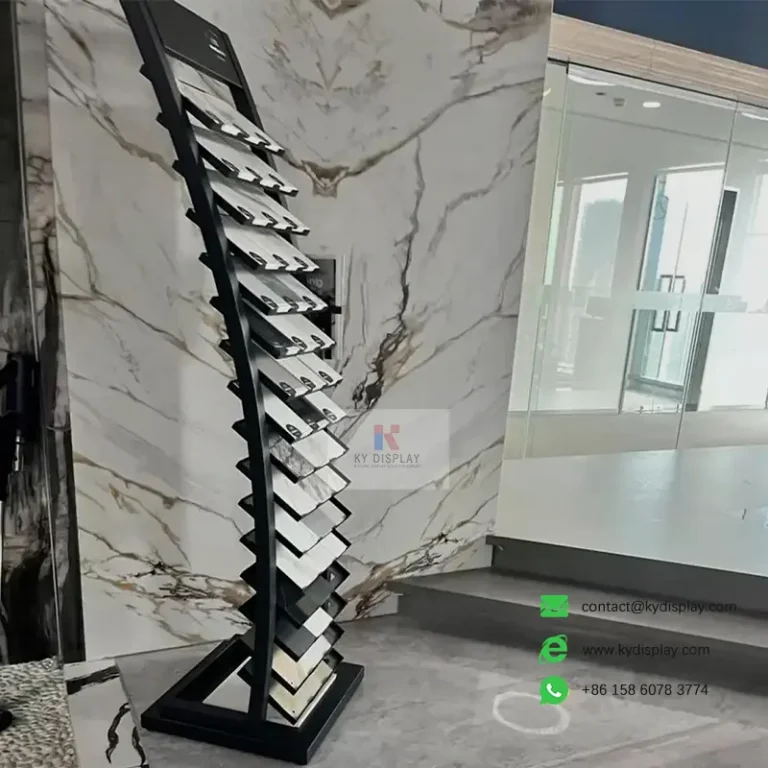
An LVT display rack is a fixture built to present luxury vinyl tile, the square and rectangular formats that imitate stone, ceramic and concrete, at a size and angle where a customer can judge pattern, grout lines and surface texture. Plank and tile do not sell the same way, so they should not share one display.
Who this is for: flooring retailers, distributors and showroom groups carrying resilient flooring. Most stock both plank and tile formats and currently present them on the same rack, which hides the difference that actually drives the sale.
Why an LVT Display Rack Needs a Different Layout Than Plank
An LVT display rack has to show geometry. Luxury vinyl tile comes in squares and rectangles, commonly 12 by 12 inches, 12 by 24 and 18 by 18, and it imitates stone, marble, slate, terrazzo and concrete. Luxury vinyl plank comes in long boards, roughly 6 to 9 inches wide and 36 to 60 inches long, and imitates hardwood. Same construction, different shape, different decision.
Performance is not the difference between them. Both formats share the same layer build: backing, core, printed design layer and a clear wear layer. Durability is therefore set by wear layer thickness and core type, not by whether the piece is a tile or a plank.
Around 12 mil suits moderate residential traffic, 20 mil suits high-traffic residential and light commercial, and 28 mil and above suits heavy commercial. Treat these as industry reference and check your own product data.
Core choice follows the same logic. SPC, or stone plastic composite, is dense and resists dents. WPC, or wood plastic composite, uses a foaming agent and feels softer and warmer underfoot. Either core can appear in either format, which is why the shape alone tells a buyer nothing about performance.
LVT and LVP Side by Side
| Point | LVT (tile format) | LVP (plank format) |
|---|---|---|
| Shape | Squares and rectangles | Long, narrow boards |
| Imitates | Stone, marble, ceramic, concrete, terrazzo | Hardwood |
| Common sizes | 12 x 12, 12 x 24, 18 x 18 inches | 6 to 9 inches wide, 36 to 60 inches long |
| Typical install | Glue-down; click-lock also offered | Click-lock floating |
| Grout option | Yes, groutable LVT reads as real tile | No |
| Layout options | Herringbone, basketweave, pinwheel, borders | Staggered running bond |
| Best rooms | Bathrooms, laundry, mudrooms, entryways | Living rooms, bedrooms, open-plan areas |
| Durability driver | Wear layer and core | Wear layer and core |
One naming caution: in some markets, notably the UK, LVT is used as a catch-all for all luxury vinyl, planks included. When you plan an LVT display rack, ask for the core type and the wear layer thickness, because the name alone will not tell you what you are buying.
7 LVT Display Rack Ideas That Sell
1. Grouted Sample Strip
Grout is the detail that makes LVT read as real tile. Build one strip with an actual grout joint so customers can see the finished effect rather than imagine it.
2. Full-Size Tile Bay
Keep at least one full-size tile per range visible. A small chip cannot show pattern repeat, and repeat is what customers buy into.
3. Pattern Layout Board
Show herringbone, basketweave or offset on a single board. Layout variety is the strongest argument tile format has over plank, and an LVT display rack is the natural place to make it.
4. Wet-Room Vignette
Group bathroom and laundry ranges together with a wet-area sign. Both plank and tile are waterproof when the core is right, but customers still shop by room.
5. Spec Card at Every Bay
Print wear layer in mil, core type, thickness, install method and warranty next to the sample. These are the numbers that actually decide the sale, and they are the reason an LVT display rack needs a card holder built in.
6. Vertical Bay for Long Rectangles
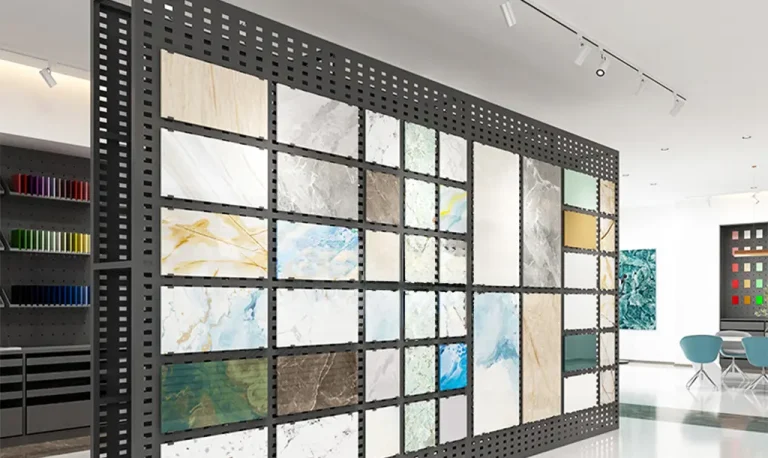
A 12 by 24 tile reads best upright. Plan at least one bay tall enough to hold the longest rectangle you stock without cutting it.
7. Mobile Bay on Castors
Flooring ranges re-merchandise often. Put the tile bay on lockable castors so a promotion can move to the entrance and back without a rebuild. A mobile LVT display rack also lets one fixture serve two ranges.
How to Choose an LVT Display Rack
Start from the formats you stock, not from a catalog. List your largest tile size and your heaviest sample, then size the bay to hold both. Decide next whether the rack sits on a wall or stands on the floor, because wall space is cheap while floor space is not.
Weight is the constraint people under-estimate. Resilient tile samples are lighter than porcelain, but a grouted board plus backing is not, so specify a steel frame and a base wide enough that a leaned panel cannot tip the unit.
Three Mistakes to Avoid
Presenting tile and plank on one undifferentiated rack, which erases the format difference. Hiding the wear layer spec, which forces staff to narrate every bay. Lighting the ceiling instead of the sample face, so the texture on an LVT display rack never reads.
For resilient flooring standards and terminology, the Resilient Floor Covering Institute publishes reference material the trade uses, and Coverings is where the tile and stone industry reviews new display systems. KYDISPLAY builds OEM/ODM modular flooring display stands, dual slanted flooring racks and multi-sample flooring displays to your tile sizes and logo. For the plank side of the range, see our LVP display rack ideas. Start a specification through the custom display rack page.
Frequently Asked Questions
What is an LVT display rack?
A fixture built to present luxury vinyl tile, the square and rectangular formats, at a size and angle where a customer can judge pattern, grout lines and surface texture.
What is the difference between LVT and LVP?
Format. LVT is cut into squares and rectangles and imitates stone or ceramic, while LVP is cut into long planks and imitates hardwood. Construction and performance are the same.
Is LVT more durable than LVP?
No. Durability is set by wear layer thickness and core type, not by shape. A 20 mil tile and a 20 mil plank perform the same way.
What wear layer should I look for?
Around 12 mil suits moderate residential traffic, 20 mil suits high-traffic residential and light commercial, and 28 mil and above suits heavy commercial. Treat these as industry reference.
Does LVT need to be glued down?
It is more often glue-down than plank, and it offers groutable options, but click-lock versions exist. Check the product specification rather than assuming.
Can LVT be used in a bathroom?
Yes. Tile format is the common choice for bathrooms, laundry rooms and entryways because it carries the stone look that suits those rooms.
Why do I see LVT used for planks as well?
In some markets, notably the UK, LVT is used as a catch-all term for all luxury vinyl. Always confirm the core type and wear layer rather than relying on the name.
How big should a tile sample on the rack be?
Big enough to show pattern repeat. Keep at least one full-size tile per range visible, with smaller chips catalogued below it.