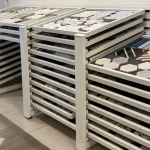
A STONE DISPLAY SOLUTION EXPERT !



Best Stone Sample Board Sizes & Ideas (2026 Guide)
A buyer’s guide to stone sample board sizes, materials and showroom layouts — what fabricators and NKBA research say about selling stone honestly.
Table of Contents
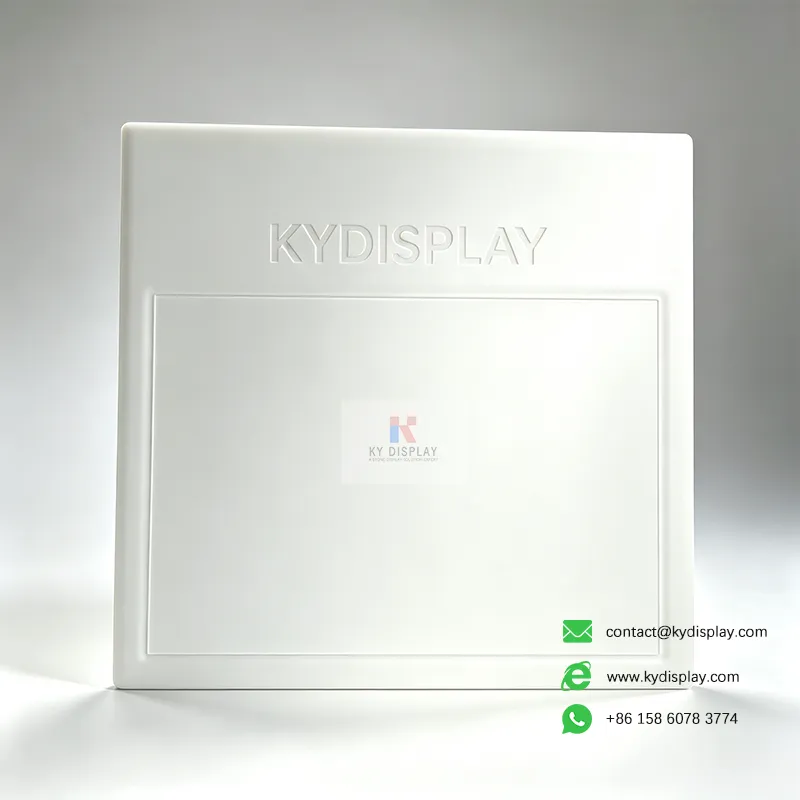
What Is a Stone Sample Board?
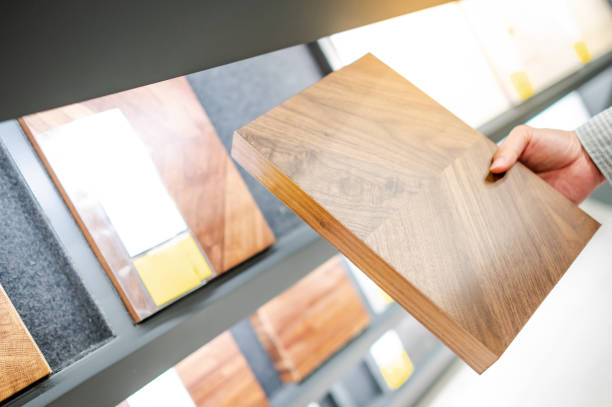
A stone sample board is a presentation panel built to carry a stone veneer, slab offcut or full-format sample at a size large enough to show the material’s real character — its movement, its veins and its color drift — rather than a postage-stamp chip that fits in a client’s palm. Unlike a loose 4-inch swatch, a board this size reads the stone the way it will on a kitchen island or a hotel lobby wall. Stone Business magazine’s showroom reporting makes the point plainly: small samples “sell the stone short” and underestimate the material. A well-built board lets a fabricator show that a vein continues across the slab — not just inside a tiny square.
The category spans every natural and engineered stone. A marble sample board, a granite sample board, quartz, porcelain and travertine all earn their own board format because each material reveals its beauty at a different scale. KYdisplay’s own Mosaic Plastic Sample Board is 320×320 mm — compact proof that board size is matched to the sample, not the other way round. The takeaway for a buyer is simple: a board is the honest unit of presentation, and its size is the single biggest lever on whether your client trusts what they are buying.
Why a 4-Inch Chip Lies About Your Stone
The anxiety every fabricator knows is this: a client walks in, picks up a 4-inch sample, and assumes the whole slab looks like that. Stone Business magazine, quoting Chris Mian of Louis W. Mian, describes exactly this — a client takes a 4-inch sample and assumes the whole slab looks like that; when the result doesn’t match, the fabricator eats the disappointment. The chip hides the very thing that sells the stone: the way veins travel, the way two books of the same block differ, the way a dramatic pattern only appears once the material is spread out.
Rupesh Shah of MSI makes the same argument from the travertine side: they display travertine in large format 3 ft × 5 ft and 3 ft × 3 ft because travertine’s beauty only shows when spread out. Northwestern, a Chicago fabricator, shows 12×12-inch samples — bigger than a chip, but still a deliberate step up from the palm-sized square. The lesson is consistent across all three fabricators: the smaller the sample, the more the stone is underestimated, and the more likely the delivered slab surprises the client in the wrong way.
A board is the honest fix — at 12×24 inches, or as a four-piece combo board, the fabricator shows veins continuing across the slab, exactly the reassurance that prevents a “this isn’t what I picked” argument six weeks later.
Real Board Sizes Fabricators Use for a Stone Sample Board
Pulling the verified fabricator evidence together gives a practical size ladder a buyer can shop against:
- 12×24 inch (≈305×610 mm): Chris Mian’s go-to for showing vein continuity. This is the workhorse board format for granite and marble counters.
- Four-piece combo board: Mian’s alternative — four related slabs on one board so the client sees the full range of one stone family at once.
- 3 ft × 5 ft and 3 ft × 3 ft (≈910×1525 mm and 910×910 mm): MSI’s large-format travertine boards, used when the material only reads when spread wide.
- 12×12 inch (≈305×305 mm): Northwestern’s Chicago showroom standard — a middle ground above the chip.
The market also offers smaller handled formats worth knowing. Victor Stone Display lists small stone samples at 4×4 in, 5×10 in and 6×12 in, with tower stands holding 30–80 colors. Quartz Sample Display’s VQ104/VQ105 hold 24 pieces of 250×250 mm samples. Tsianfan’s stone sample book runs an outer 334×240×40 mm with 43×88×4.5 mm chips and a 48-chip capacity. These are useful for catalogs, but for the “does the slab match?” conversation, the 12×24 inch board and the large formats win.

Stone Sample Display Board vs Stone Sample Book
A stone sample display board and a stone sample book solve different jobs. The book is a bound catalog of many small chips — Tsianfan’s, for example, carries 48 chips in an outer 334×240×40 mm case — great for browsing a whole range on a desk. The stone sample display board is the closer: a few large, lit samples that prove the stone at scale. The buyer-psychology split is clear. A book feeds comparison; a board feeds confidence. In a showroom you want both — the book for breadth, the board for the “yes, this is the one” moment that converts.
Marble Sample Board — Where the Veins Decide
On a marble sample board, size is everything. Marble’s drama lives in its veining, and a 4-inch chip can show a single vein or none at all, telling the client nothing about the slab they will receive. Chris Mian’s 12×24 inch format exists for exactly this: it shows the vein continuing across the slab, so a Calacatta or Statuario reads as the flowing stone it is, not a static square.
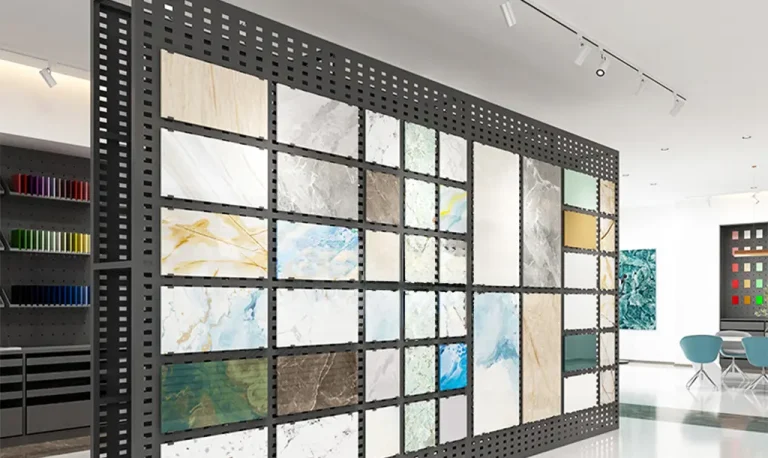
For showrooms, zone marble boards within the material family, ordered light to dark, each labeled with name, origin, finish and use. A curated marble sample board wall — 30 to 50 slabs, not 200 — lets a client fall in love with two or three instead of fleeing a wall of choice. Pair the wall with KYdisplay’s stone display system so the heavy marble sits beside the light boards in one clean zone.
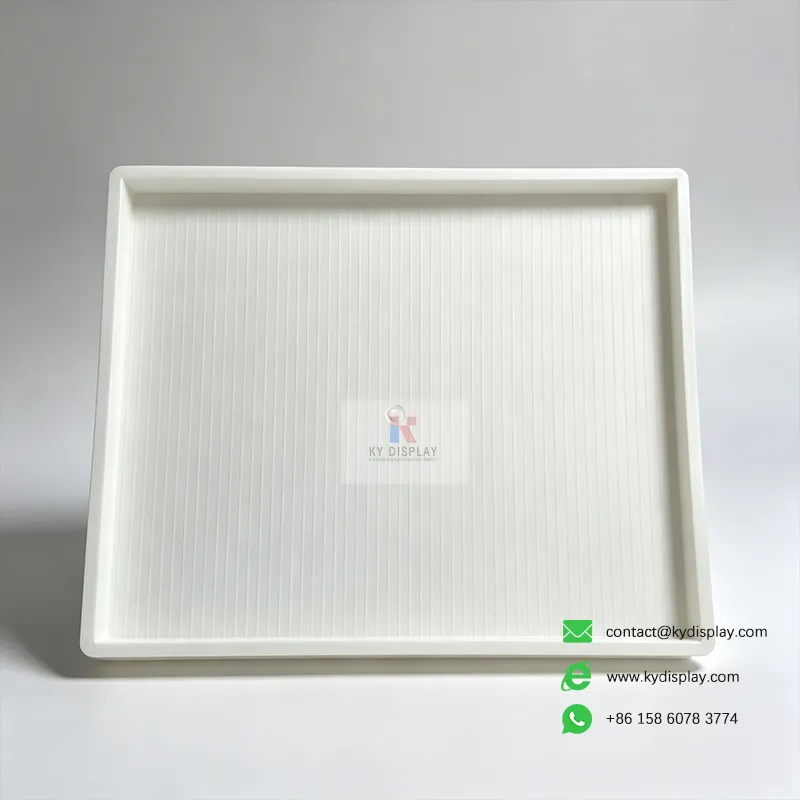
Granite Sample Board — Why Big Formats Sell
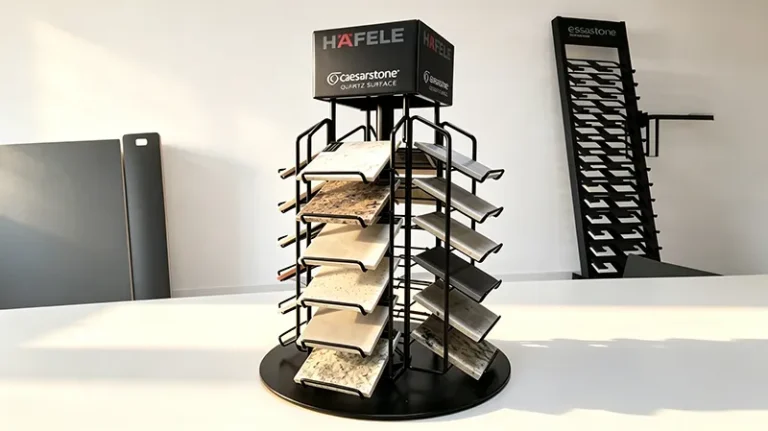
Granite’s speckle and movement only make sense at size. A granite sample board at 12×24 inches shows the actual grain flow a client will live with for twenty years. MSI’s logic for travertine applies to granite too: the material’s beauty only shows when spread out. Pair a granite sample board with a floor-standing rack — KYdisplay’s stone display standing display rack holds the heavy slabs a granite range demands — and the showroom reads as a specialist, not a warehouse. When choice is curated and the slabs are big, the granite practically sells itself.
The Right Stone Sample Board Material — MDF, Wood, Steel or Plastic
Board substrate changes how the sample is presented and how long it survives the showroom floor:
- MDF: light and economical, good for flat stone sheets and chip books.
- Wood: warm, natural feel that suits premium stone ranges and designer showrooms.
- 2.0 mm seamless steel: KYdisplay’s standard — rigid, wipe-clean and built for daily showroom wear and heavier slabs.
- Plastic: KYdisplay’s Mosaic Plastic Sample Board is 320×320 mm; the market also offers plastic sample books for chip catalogs.
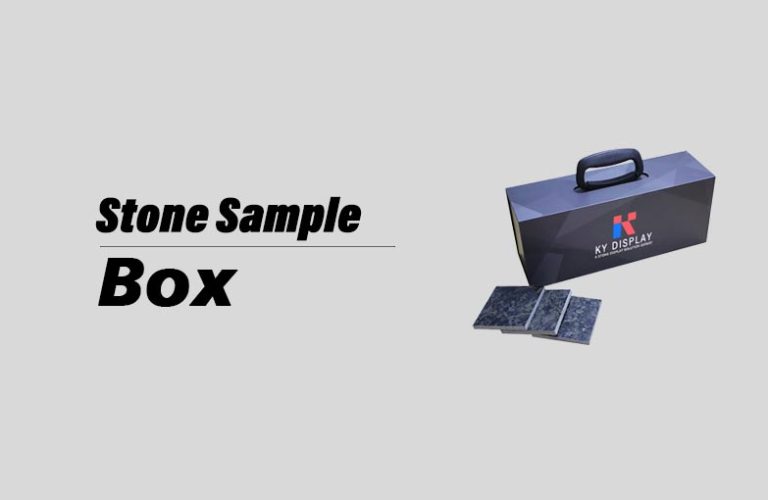
KYdisplay builds board units from 2.0 mm seamless steel as standard, with wood, MDF or fully custom materials available. A custom stone sample board lets you specify substrate, size, color and logo together, so the board matches both the stone and your brand. Browse the handled lines that share this standard: the wood sample boards with handle, the brick sample boards with handle and the mosaic display boards with handle.
Curate 30–50 Boards, Not a Wall of 200
Choice overload is the silent killer of showroom sales. Dynamic Stone Tools‘ showroom study and Slab Wise both warn that a pile of 200 samples paralyzes buyers — they leave and call three more shops. The cure is curation: 30 to 50 carefully chosen boards outsell a loose pile every time. Within each material zone, present 3 to 5 options with context rather than a list of 10 without it. The choice paradox is real — give buyers a guided shortlist and they decide; give them everything and they decide to leave. This is where a board earns its keep: each board is a deliberate, labeled invitation, not noise.
Lighting and Color Truth
Lighting is the highest-ROI change in any stone showroom, and it makes or breaks a board. Daylight-rated 5000–6500 K LEDs show the stone’s true color; warm 2700–3000 K lighting sets an ambiance but can flatter — and mis-sell — the material. A mislit board lies about the stone just as surely as a 4-inch chip does. Spec every board display at 5000–6500 K so the client sees the honest color they will get at home, and the “this isn’t what I picked” risk drops. Professionalism reads in the light as much as in the slab.
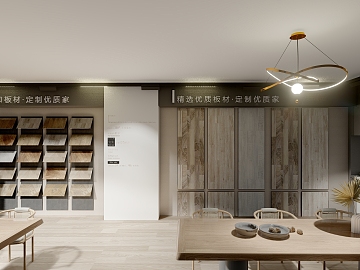
How to Lay Out a Stone Sample Board Wall
Follow the verified showroom principles:
- Vertical display beats flat — boards stand up where the client stands.
- Zone by material family: granite, marble, quartz, porcelain.
- Within each zone, order light to dark.
- Label every board: name, origin, finish, use, price.
- Curate 30–50 per zone; cap the total so choice stays manageable.
- Light at 5000–6500 K.
A standing display rack groups heavy slabs beside light boards in one zone; KYdisplay’s stone display standing display rack is built for exactly this. Handled boards — wood, brick or mosaic sample boards with handle — travel from the wall to the consultation desk for one-to-one presentations. The board wall is the stage; the handled board is the close.
Customization, Logo and Brand
A custom board carries your identity. KYdisplay offers logo printing, OEM/ODM, and a free showroom design service, backed by a 10,000 m² facility and 16+ years of custom display manufacturing. Handled sample boards start at MOQ 500 units; sample lead time is 1–2 weeks, mass production 3–4 weeks after design approval. The custom board is where substrate, size, color and logo are specified together so the board sells both the stone and your name.
How to Choose a Stone Sample Board Supplier
NKBA’s 2024 research sets the bar for why the display investment pays: 7 in 10 (≈70%) homeowners consult a showroom, designer or contractor when starting a project; 2/3 of design and remodeling professionals report a conversion rate of 50% or higher, with a median of 64%; only 6% of consumers who visit a showroom leave without buying; and in-store visits drive an average upgrade of +31% versus the initial selection. Sixty percent of homeowners view a virtual showroom first. A curated board wall is the lever behind those numbers — it reads as professionalism, which lifts trust in your quote and your quality.
When you compare suppliers, check material options (MDF, wood, steel, custom), customization depth (size, logo, color), MOQ and lead time, and whether they offer a free showroom design service. KYdisplay meets all of these and backs them with 16+ years and a 10,000 m² facility — more on the team in our about-us page. Read the sibling guides together: the stone sample book and the stone sample display stand — publish them in the same batch so the internal links hold.
Frequently Asked Questions
What is a stone sample board and why is it bigger than a chip?
A stone sample board is a presentation panel sized to show a stone’s real character — veins, movement and color drift — rather than a 4-inch chip that hides them. Stone Business magazine notes small samples “sell the stone short”; fabricators like Chris Mian use 12×24 inch boards so clients see veins continue across the slab.
What size should a stone sample board be?
Verified fabricator practice: Chris Mian uses 12×24 inch samples or four-piece combo boards; MSI displays travertine at 3 ft × 5 ft and 3 ft × 3 ft; Northwestern shows 12×12 inch. For most granite and marble counters, 12×24 inch is the workhorse board format.
MDF or plastic — which board material is better?
It depends on the job. MDF is light and economical for flat sheets; plastic (KYdisplay’s Mosaic Plastic Sample Board is 320×320 mm) suits chip catalogs. KYdisplay’s standard is 2.0 mm seamless steel for rigidity and daily wear, with wood, MDF or custom available.
How many stone sample boards should a showroom display?
Curate 30 to 50 boards per material zone rather than a wall of 200. Dynamic Stone Tools’ and Slab Wise’s showroom studies warn that 200 samples cause choice overload and buyers leave. Present 3 to 5 options with context, not 10 without.
What lighting shows stone color truthfully on a sample board?
Daylight-rated 5000–6500 K LEDs show true color; warm 2700–3000 K sets ambiance but can mis-sell the stone. Light every board at 5000–6500 K so the client sees the honest color they will receive.
Can KYdisplay customize a stone sample board with my logo?
Yes. KYdisplay offers logo printing, OEM/ODM, and a free showroom design service on a 10,000 m² facility with 16+ years of custom manufacturing. Handled boards start at MOQ 500 units; sample lead 1–2 weeks, mass production 3–4 weeks.