A STONE DISPLAY SOLUTION EXPERT !



Best Stone Sample Book: 30–50 Curation Guide
A practical guide to designing, curating and presenting a stone sample book — drawn from real fabricator experience, NKBA showroom research and the sizes the market actually offers.
Table of Contents

What Is a Stone Sample Book?
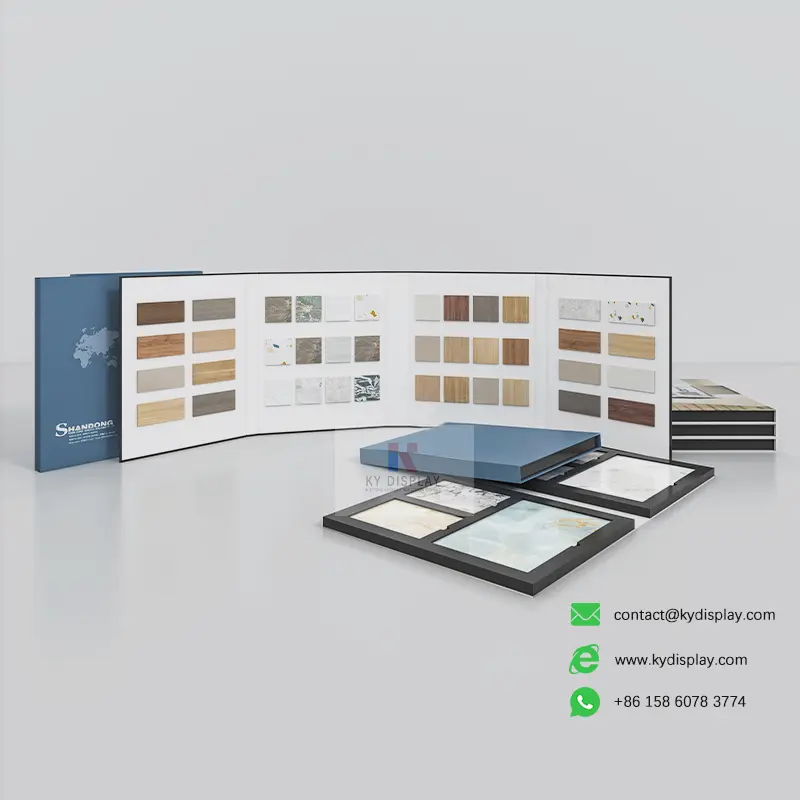
A stone sample book is a bound, portable catalog that presents a curated set of stone chips or samples side by side, so a designer, fabricator or sales rep can walk a client through a material range in one tidy unit. Where a loose pile of offcuts feels temporary and easy to dismiss, a stone sample book reads as a finished, curated presentation — the difference between handing someone a scrap and handing them a catalog.
KYdisplay makes stone sample book products and stone sample boxes for exactly this moment: the client presentation. As one customer put it on the KY site, “KY Display’s stone sample books are perfect for client presentations.” The format scales too — a marble sample book for a premium range, a quartz sample book for an engineered-stone line, or a slimmer stone sample folder for field reps who need something lighter in a bag.
Why Small Chips Underestimate Stone
The single biggest risk in stone sales is the mismatch between a tiny chip and the finished stone. Stone Business magazine’s showroom study, “Showrooms: It Pays To Display,” quotes real fabricators on exactly this problem.
Chris Mian of Louis W. Mian notes that a client takes a 4-inch sample and assumes the whole stone looks like that — and then “result doesn’t match.” He counters with 12″×24″ samples or four-piece combo boards so the client can see veins continue across the stone.
Rupesh Shah of MSI displays travertine in large format 3 ft × 5 ft and 3 ft × 3 ft, because travertine’s beauty only shows when it is spread out. A Chicago fabricator, Northwestern, shows 12″×12″ samples.
The study’s blunt conclusion: small samples “sell the stone short” — they underestimate the material.
This is where a stone sample book earns its place. A book with 43×88mm chips at 48-chip capacity does not pretend to be the full stone, but it shows the range honestly — enough surface to read veining, movement and tone without the misleading promise of a 4-inch chip.
The buyer psychology is simple: a loose chip feels cheap and temporary; a bound book feels like a curated professional catalog, and that perception builds trust before a word is spoken.
The Psychology of the Showroom Visit
NKBA‘s 2024 research gives the numbers behind the meeting. Seven in ten (about 70%) of homeowners consult a showroom, designer or contractor when they start a project.
Two-thirds of design and remodeling professionals report a conversion rate of 50% or higher, with a median conversion of 64%. Sixty percent of homeowners view a virtual showroom first.
And only 6% of consumers who visit a showroom leave without buying. In-store visits drive an average upgrade of +31% versus the initial selection.
Read that sequence carefully. Sixty percent of homeowners already viewed a virtual showroom before they ever walk in — which means the in-person stone sample book is the closer, not the introducer.
It has to survive being carried to job sites, designer meetings and trade shows, and it has to answer the client’s hidden fear: “Will I trust this sample?” A bound, branded book answers that fear on contact. The +31% in-store upgrade figure is the prize: a physical book in the client’s hands is what moves selections up, not down.
Real Stone Sample Book Sizes on the Market
The market offers a range of real sample-book specs you can benchmark against before you spec your own. One supplier’s stone sample book measures 334×240×40 mm outer, with 43×88×4.5 mm chips and a capacity of 48 chips; a larger model runs 365×245×50 mm outer, with 180×60×4.5 mm chips and a capacity of 32 chips.
Another maker offers small stone samples at 4×4 in, 5×10 in and 6×12 in, with tower stands that hold 30–80 colors. A quartz-focused book line (VQ104/VQ105) holds 24 pieces of 250×250 mm samples.
None of those are KY specs — they are the competitive landscape. The point for a buyer is to map chip size and capacity to your range: 43×88mm chips at 48 capacity suit a broad catalog; 180×60mm chips at 32 capacity suit a premium, fewer-SKUs line.
A marble sample book or quartz sample book built on either footprint gives you a credible, comparable unit. (If you need a lighter carry piece, a stone sample folder is the slimmed-down cousin of the same idea.)
Book vs Board vs Box: When a Stone Sample Book Wins
Three formats do different jobs, and mixing them is smarter than picking one. A stone sample book is the closer for one-to-one presentations — the whole range in one hand.
A sample board is a single handled panel that carries one sample (see our sibling article on the stone sample board); it shines when you want to show one full material at full presence. A sample box or sample case protects loose, larger chips for transport and storage — browse the real products: the tile stone sample book, the tile stone sample box and the tile stone sample case.
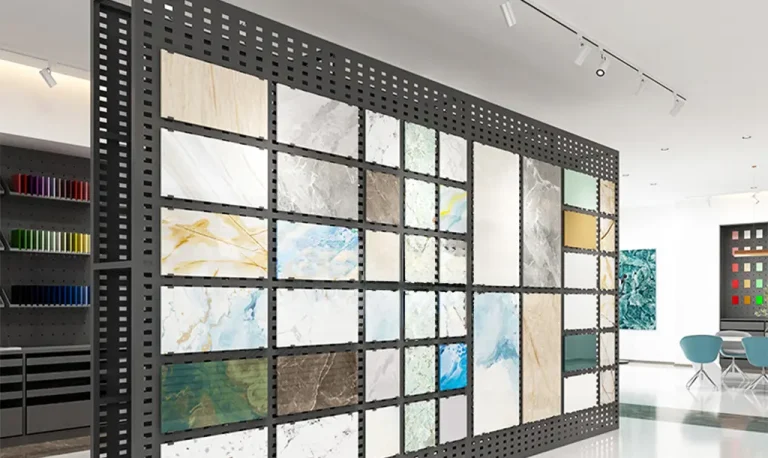
In the room, the book wins when the goal is comparison and trust; the board wins when the goal is impact on a single material; the box wins when chips must travel uncracked. For wall and floor staging of full-size materials, KY’s stone display and mosaic display boards with handle round out the system.
How to Curate a Stone Sample Book That Sells
Curation is the difference between a book that closes and a book that confuses. The showroom principles from dynamicstonetools.com and slabwise.com apply directly to the page: curate 30–50 samples rather than piling 200, because choice overload paralyzes buyers.
Display vertically rather than flat; zone by material family; and label each chip with name, origin, finish, use and price. Lighting is the highest-ROI move in any showroom — daylight at 5000–6500 K shows true color, while warm 2700–3000 K sets an ambiance.
Remember the NKBA figure that only 6% of showroom visitors leave without buying — the other 94% convert or stay in play, and a curated book is what keeps a wavering client in the room. When the book is labeled, zoned and lit correctly, it does the persuading so the designer does not have to argue.
That is the quiet ROI of curation: fewer lost clients, a higher average selection, and a leave-behind that survives the ride home.
A stone sample book that follows these rules stops being a pile and becomes a sales tool. Thirty to fifty well-labeled chips, zoned by marble versus quartz versus granite, lit to show true color, read as expertise.
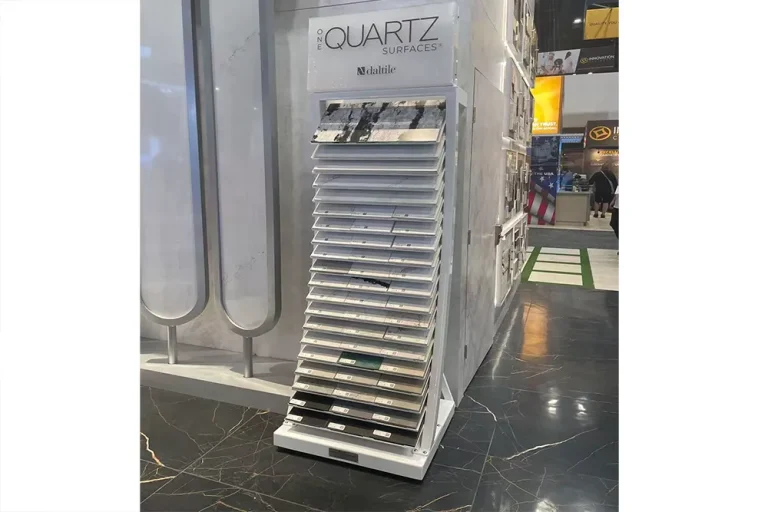
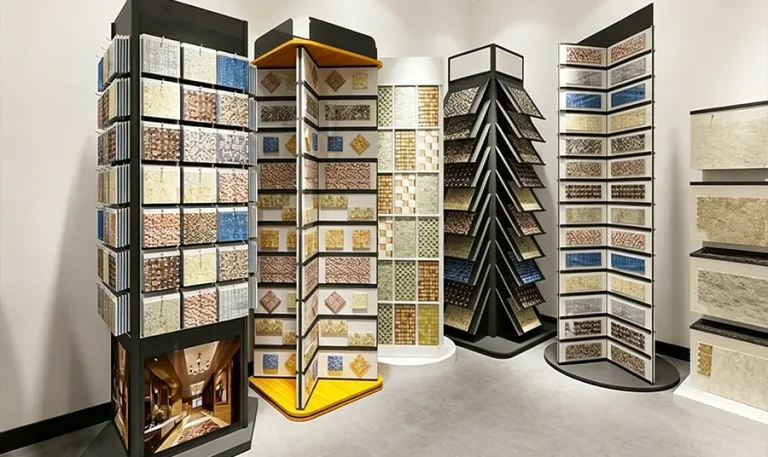
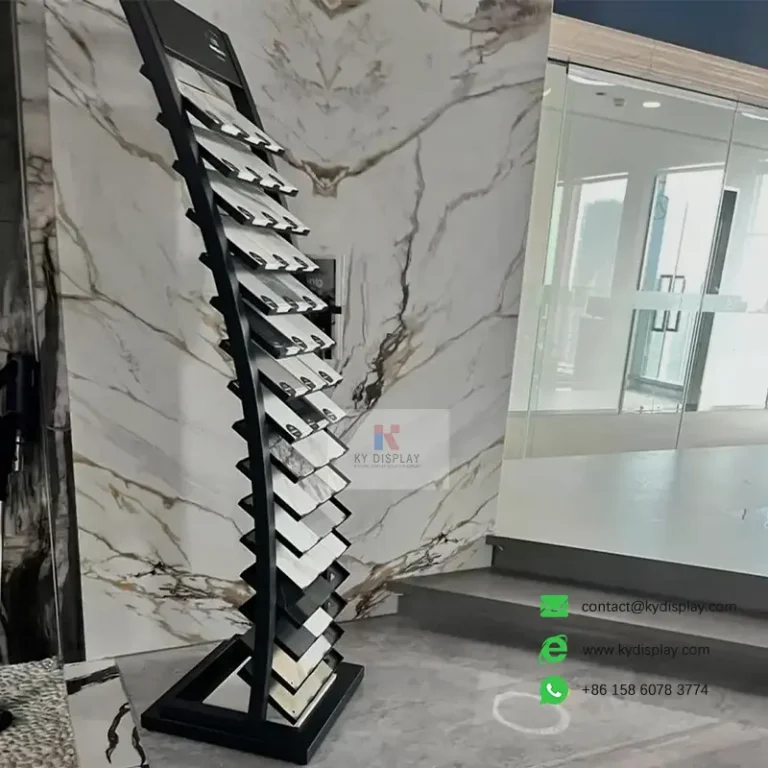
Pair the book with a stone sample display stand at the counter so the same curated set works in the showroom and in the field. The book is portable proof that you curate, not just stock.
Customization & Logo Printing for Your Custom Stone Sample Book
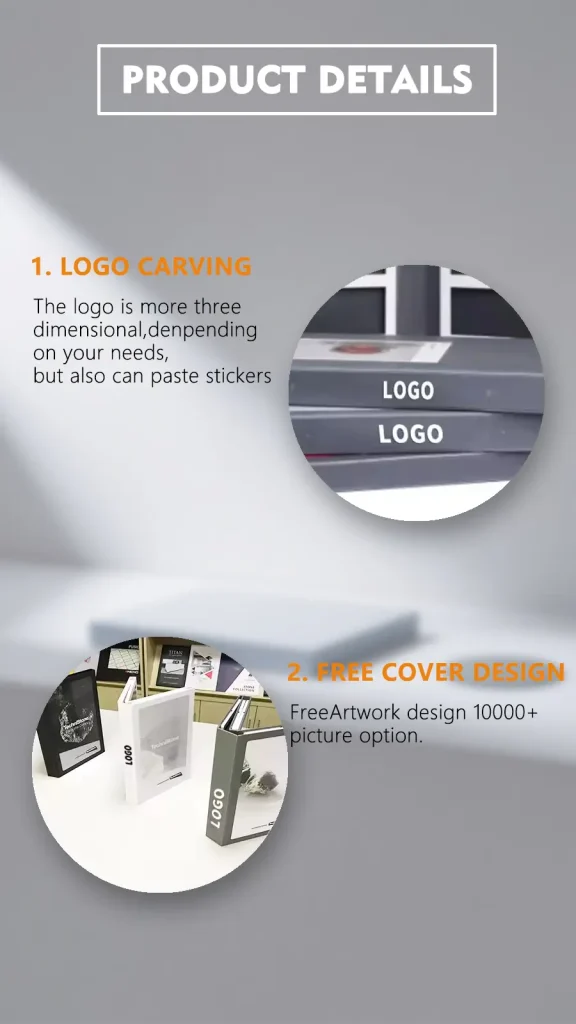
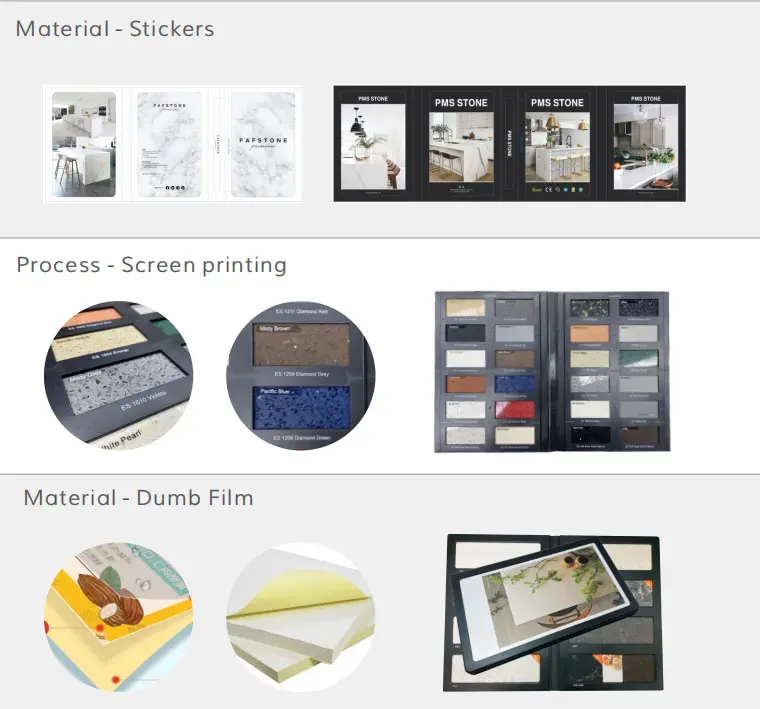
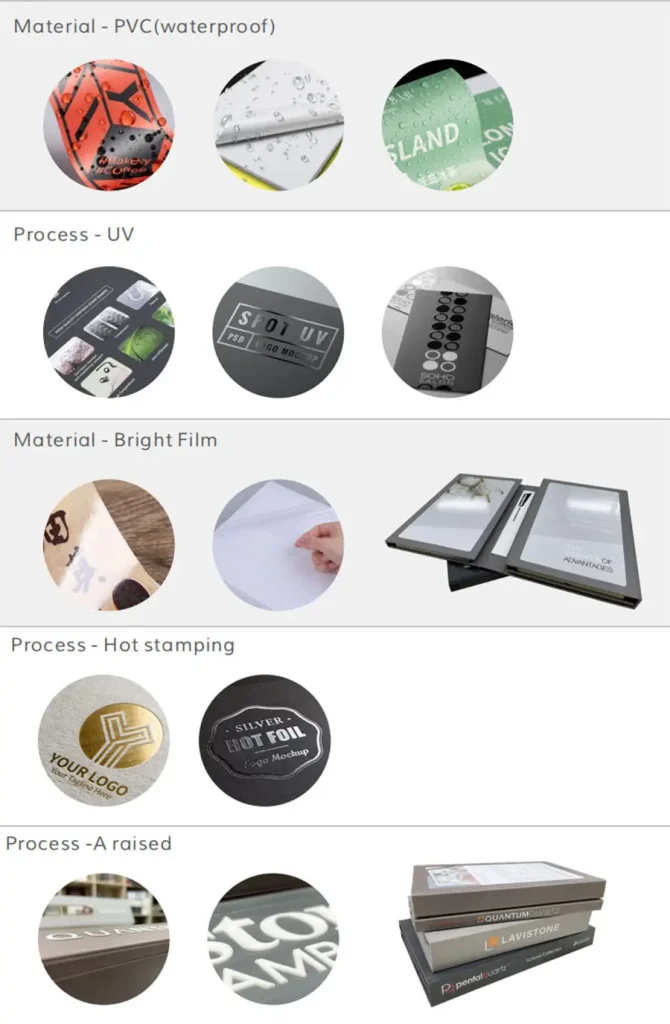
A custom stone sample book is built to order: logo printing, cover material, chip windows and capacity are all specified by you. As a manufacturer with a 10,000 m² facility and over 16 years of custom display manufacturing, KYdisplay offers OEM/ODM and a free showroom design service, and its stone sample books and sample boxes are made for client presentations.
A logo on the book is a small detail with outsized effect — it signals that you are a real supplier, not a marketplace listing, which quietly builds trust in the room.
Customization is also where a marble sample book and a quartz sample book can share one system but feel like two brands: different cover materials, different logo placement, same engineered footprint. The goal is a book that looks owned, not generic.
How to Choose a Stone Sample Book Supplier
Capacity and chip size are the two specs that decide whether the book fits your range. A 48-chip book at 43×88mm chips covers a broad catalog; a 32-chip book at 180×60mm chips suits a tighter, premium line.
Match the footprint to how many SKUs you actually sell, not to how many you wish you had — curation over clutter is the same rule that applies on the page and on the wall.
When you compare suppliers, check four things: capacity and chip size (does the book hold 43×88mm chips at 48 capacity, or larger 180×60mm chips at 32?), customization depth (logo, cover, windows), MOQ and lead time. Ask your supplier about MOQ directly — for reference, KY’s handheld sample boards carry a typical MOQ around 500 units, with sample lead 1–2 weeks and mass production 3–4 weeks after design approval; confirm the book equivalent with your supplier.
KYdisplay’s 10,000 m² facility, 16+ years of custom display manufacturing and free showroom design service are the kind of capabilities worth verifying before you commit — see about KYdisplay.
A well-built stone sample book turns a sales call into a confident close. Spec it with your logo, curate 30 to 50 chips by material family, and light it at 5000 to 6500 K — the same discipline NKBA research ties to higher in-store conversion.
That is the whole point of a stone sample book: portable expertise your client remembers after you leave.
To recap: a sample book is the single most portable, most persuasive tool a stone seller can use, and the right sample book is what turns a client meeting into a signed order. For full showroom coverage, pair it with stone sample board and stone sample display stand so the whole stone range is presented consistently.
Frequently Asked Questions
What is a stone sample book and how is it different from a sample board?
A stone sample book is a bound, portable catalog that presents a curated set of stone chips side by side for client presentations, while a sample board is a single handled panel that carries one sample. The book shows the whole range in one hand; the board focuses on one material.
KYdisplay makes both stone sample books and sample boxes for showroom and field use.
What sizes do stone sample books come in?
The market offers several real sizes. One stone sample book measures 334×240×40 mm outer with 43×88×4.5 mm chips; a larger model runs 365×245×50 mm outer with 180×60×4.5 mm chips.
Other makers offer small stone samples at 4×4 in, 5×10 in and 6×12 in, and a quartz sample book line (VQ104/VQ105) holds 24 pieces of 250×250 mm samples.
How many chips can a stone sample book hold?
It depends on chip size. A book with 43×88×4.5 mm chips holds up to 48 chips; a model with larger 180×60×4.5 mm chips holds 32 chips. Curate toward 30–50 samples rather than piling 200, since choice overload paralyzes buyers.
Should I use a stone sample book or a sample board for client meetings?
For one-to-one client meetings and field sales, a stone sample book is the closer — it survives being carried to job sites, designer meetings and trade shows, and reads as a curated catalog rather than loose chips. A sample board (one sample on a handled panel) is better when you want to show a single full material.
KYdisplay covers both; see our sibling article on the stone sample board.
Can a stone sample book be customized with my logo?
Yes. KYdisplay builds stone sample books to order with logo printing, cover material, chip windows and capacity specified by you, as part of its OEM/ODM and free showroom design service. A logo on the book signals you are a real supplier, not a marketplace listing.
What should I look for when choosing a stone sample book supplier?
Check capacity and chip size, customization depth (logo, cover, windows), MOQ and lead time. KYdisplay operates a 10,000 m² facility with over 16 years of custom display manufacturing and offers a free showroom design service — verify these capabilities, plus sample lead (1–2 weeks) and mass-production lead (3–4 weeks), before you commit.
Ask your supplier about the exact book MOQ.